
Introduction
Many of us spend hours each day looking at screens. Because of this, “screen time and your eyes” has become an important topic. Whether you work in an office, study at school, or use your phone often, your eyes can feel tired. In fact, too much screen time can cause discomfort and even affect your vision. That is why learning healthy screen habits matters for everyone.
How Screen Time Affects Your Eyes
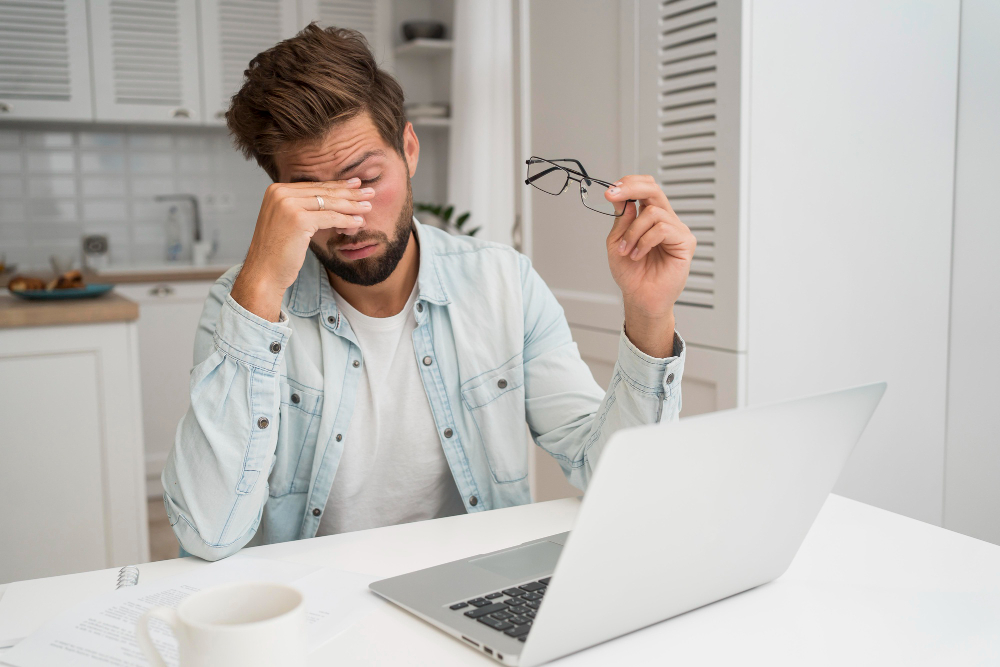
When you look at screens for long periods, your eyes can get tired. This is called digital eye strain. According to the American Academy of Ophthalmology, digital eye strain is common in both adults and children. It happens because your eyes work harder to focus on screens. Also, you tend to blink less, which can make your eyes dry.
Common symptoms of digital eye strain include:
Because screens are part of daily life, it is important to know how to reduce eye strain from screens and protect your digital eye health.
3 Habits to Protect Your Eyes from Screen Time
1. Follow the 20-20-20 Rule
First, try the 20-20-20 rule. Every 20 minutes, look at something 20 feet away for 20 seconds. This simple habit helps your eyes relax and reduces strain. You can set a timer or reminder on your phone to help you remember. Over time, this can become a healthy screen habit for both students and office workers.
2. Adjust Your Screen Settings
Next, make your screen comfortable for your eyes. Lower the brightness to match the light in your room. Increase the text size if you find it hard to read. Also, use “night mode” or blue light filters, especially in the evening. These changes can make a big difference in your digital eye health.
3. Blink Often and Take Breaks
Finally, remember to blink more often. When you focus on screens, you blink less, which can dry out your eyes. Try to blink fully and gently every few seconds. In addition, take short breaks from screens every hour. Stand up, stretch, or walk around for a few minutes. These small steps help keep your eyes moist and comfortable.
When to Seek Professional Help
Sometimes, eye strain does not go away with simple changes. You should see an eye specialist if you notice:
Even if you feel fine, regular eye check-ups are important. Early care can prevent bigger problems later. For children and adults who use screens daily, yearly eye exams are a good idea.
Conclusion
In summary, screen time and your eyes are closely linked. By following these three habits, you can reduce eye strain from screens and protect your vision. However, if you have ongoing problems, do not wait. Consult an eye specialist for personalized advice on protecting your vision.