
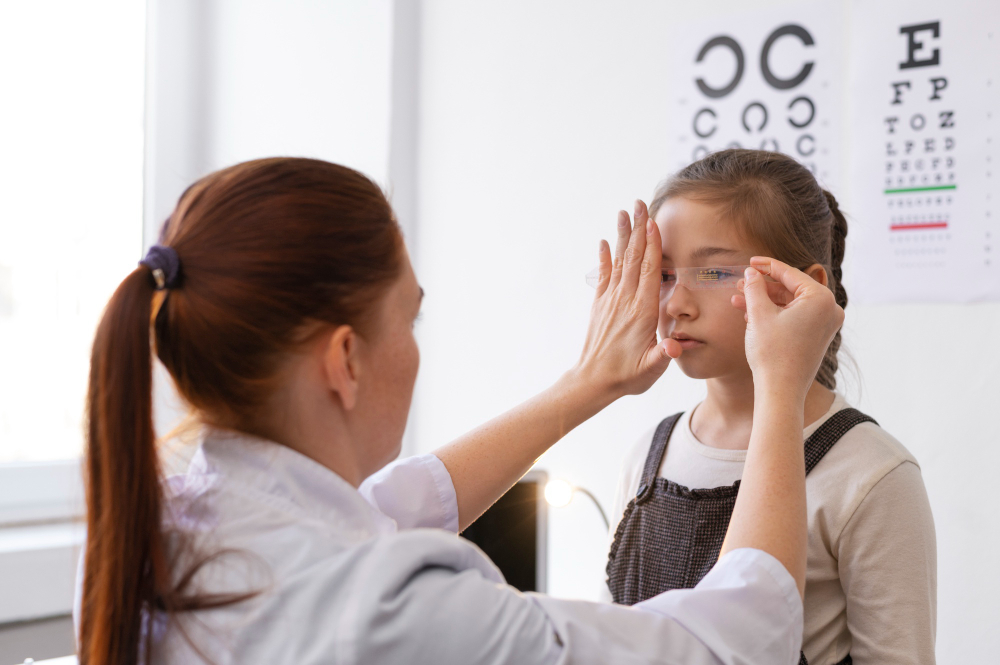
Regular eye exams for children during winter are more important than many parents realize. As the weather gets colder, children face new risks to their eye health. Dry air, indoor heating, and less sunlight can all affect children’s vision. Therefore, scheduling a pediatric eye exam in winter helps catch problems early. It also ensures your child’s eyes stay healthy all season. Let’s explore why winter matters for children’s eye health and how you can protect your child’s vision.
Why Winter Increases Eye Health Risks for Children
During winter, children spend more time indoors. Because of this, they are exposed to dry air from heaters. This dry air can make eyes feel itchy or irritated. In addition, cold winds outside can also dry out the eyes. Sometimes, children rub their eyes more often, which may lead to infections. Moreover, winter sunlight can be harsh, especially when it reflects off snow. This glare can strain young eyes. For these reasons, winter brings unique eye health risks for children.
Benefits of Regular Eye Exams in Winter
Regular eye exams in winter offer many benefits for children. First, exams help detect vision problems early. Early treatment can prevent learning difficulties and headaches. Also, eye doctors can spot signs of dryness or infection. With timely care, children avoid discomfort and stay focused in school. Furthermore, regular check-ups help track changes in vision as children grow. Because winter brings extra risks, exams are even more important during this season.
Common Winter Eye Problems in Children
Winter can cause several eye problems in children. Some of the most common include:
Because these problems are common in winter, regular eye exams help catch and treat them early.
What to Expect During a Pediatric Eye Exam
Many parents wonder what happens during a pediatric eye exam. Usually, the eye doctor will:
Most exams are quick and painless. However, early detection is key to keeping your child’s eyes healthy.
Tips for Parents: Protecting Children’s Eyes in Winter
There are simple ways to protect your child’s eyes during winter. For example:
By following these tips, you help reduce winter eye problems and keep your child comfortable.
When to Schedule an Eye Exam
It is best to schedule an eye exam for your child at least once a year. However, if your child complains of blurry vision, headaches, or eye pain, make an appointment sooner. Also, if you notice redness, swelling, or discharge, see an eye doctor right away. Early exams help prevent small problems from becoming bigger issues. The American Academy of Ophthalmology and the CDC both recommend regular eye checks for children.
In summary, winter brings special risks for children’s eyes. Regular eye exams help keep their vision clear and healthy. Consult a pediatric eye specialist to ensure your child’s eyes stay healthy this winter.